Secondary Trauma in Schools: What It Is, Why It’s Common at MYcroSchool, and What Helps
If you’ve ever gone home and realized you’re still carrying a student’s story in your body—tight chest, racing thoughts, heavy sadness, short temper—please hear this clearly:
You’re not “too sensitive.” You’re not failing at boundaries. You’re human.
At MYcroSchool, Inc., we serve 7th–12th grade At‑Promise students—students at promise of success, not “at risk of failure.” Many of our students have experienced instability, homelessness, exposure to violence, and trauma that impacts learning and behavior.
When you show up day after day with care and consistency, it can affect you. That experience has a name:
Secondary trauma.
This post explains what secondary trauma is, how it can show up, and what actually helps—without asking you to become someone who “cares less.”
Note: This is supportive wellness content, not clinical advice. If you’re struggling significantly, consider using our Employee Assistance Program (EAP)—ask HR for details.
What is secondary trauma?
Secondary trauma (sometimes called secondary traumatic stress) can happen when you’re repeatedly exposed to other people’s trauma—through stories, crises, behaviors, or the ongoing realities students face.
You may not have lived the event yourself, but your nervous system can still respond as if you’re in danger, or as if you’re responsible for preventing the next painful thing.
In schools, secondary trauma can build quietly because:
- there’s rarely time to process what you witness
- you move from crisis to the next class period
- you care deeply, and the stories are real
Secondary trauma vs. “a hard day”
A hard day is normal. Secondary trauma is when hard days stack up and start changing how you feel, think, or function.
It might look like:
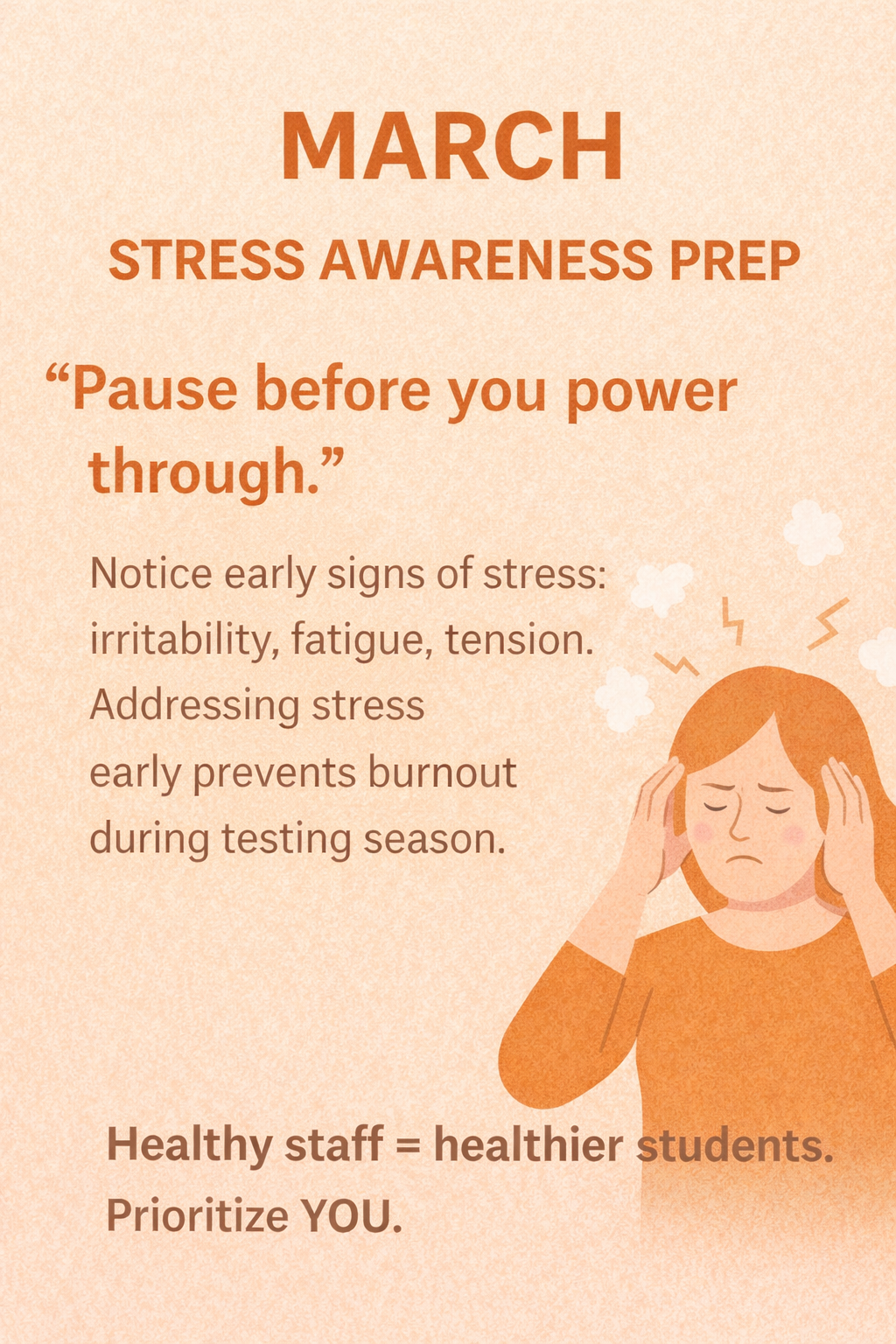
- you’re more on edge than usual
- you avoid certain situations because they feel too activating
- you feel numb or disconnected
- you’re replaying moments in your head
- your sleep shifts (insomnia, nightmares, waking up tired)
This doesn’t mean you’re not built for the work. It means the work is intense—and your system needs support.
Signs secondary trauma may be affecting you
You don’t need to check every box. If you recognize a pattern, that’s enough to take it seriously.
In your body
- tension you can’t “stretch out”
- headaches or stomach issues
- fatigue that doesn’t match your sleep
- jumpiness or feeling easily startled
In your emotions
- irritability, impatience, or anger that surprises you
- sadness that lingers
- feeling helpless more often than you used to
In your thinking
- expecting the worst
- trouble concentrating
- cynicism that wasn’t part of your personality before
In your relationships
- withdrawing after work
- feeling like nobody understands
- feeling “done” with people by the end of the day
What helps (without forcing you to “toughen up”)
1) Name it—without shame
A simple sentence can reduce the spiral:
“This is secondary trauma showing up. I need support and recovery, not self-criticism.”
Naming it doesn’t make you dramatic. It makes you accurate.
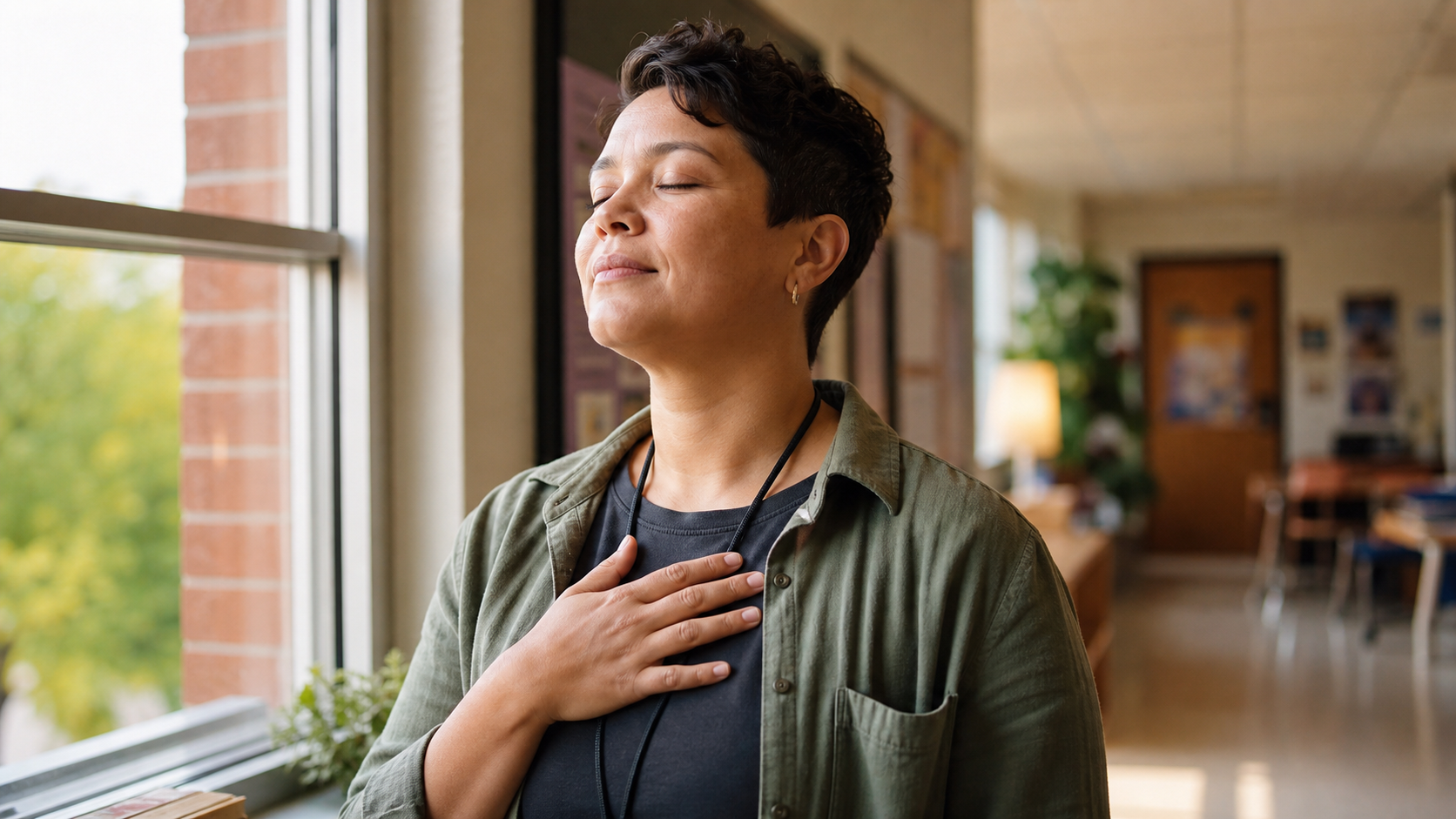
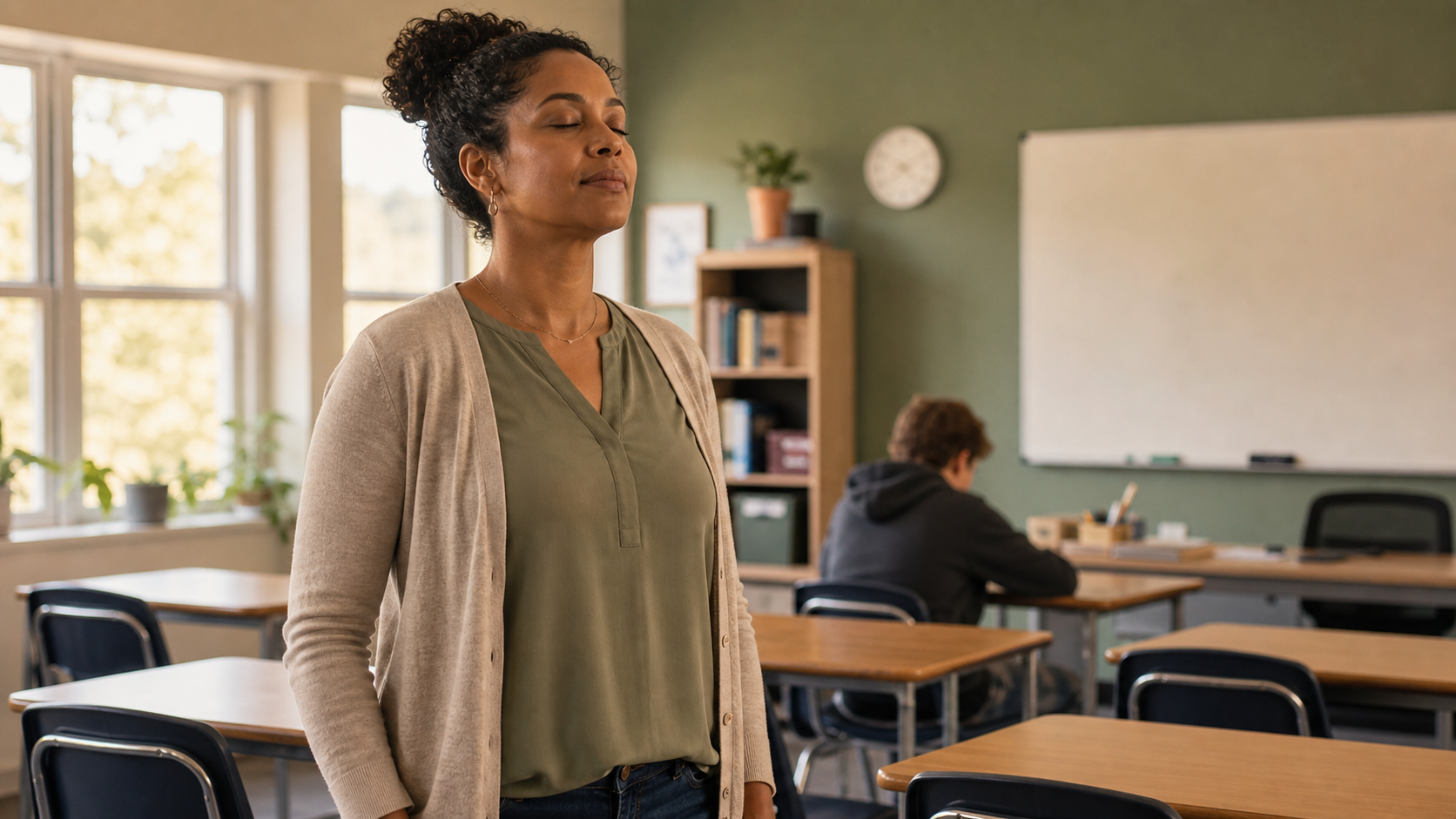
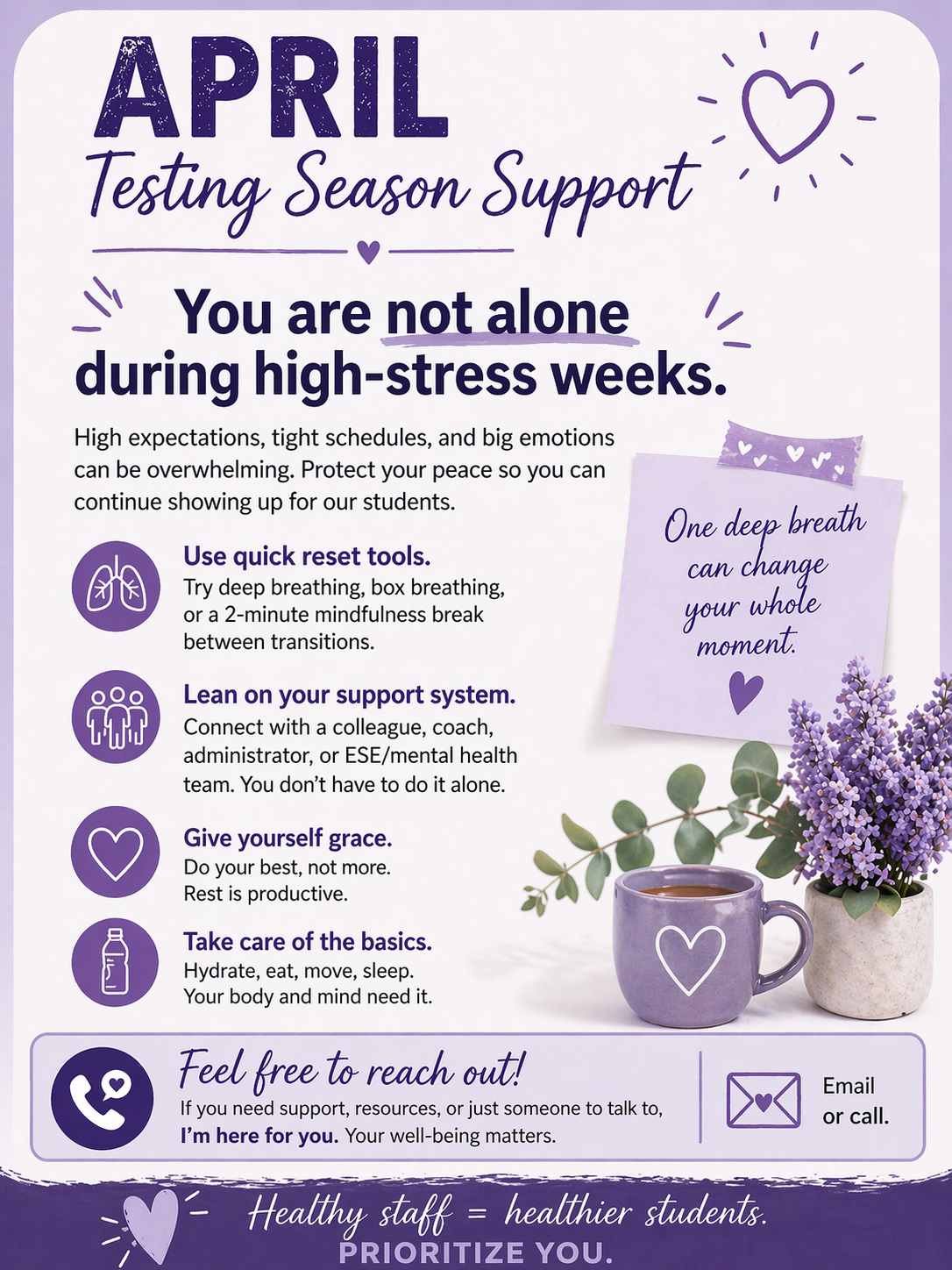
2) Create a 60-second transition between student stories and your next task
When you go from an intense moment straight into the next responsibility, the stress stays in your system.
Try one quick transition:
- 5 slow breaths with a longer exhale
- a short walk to get water
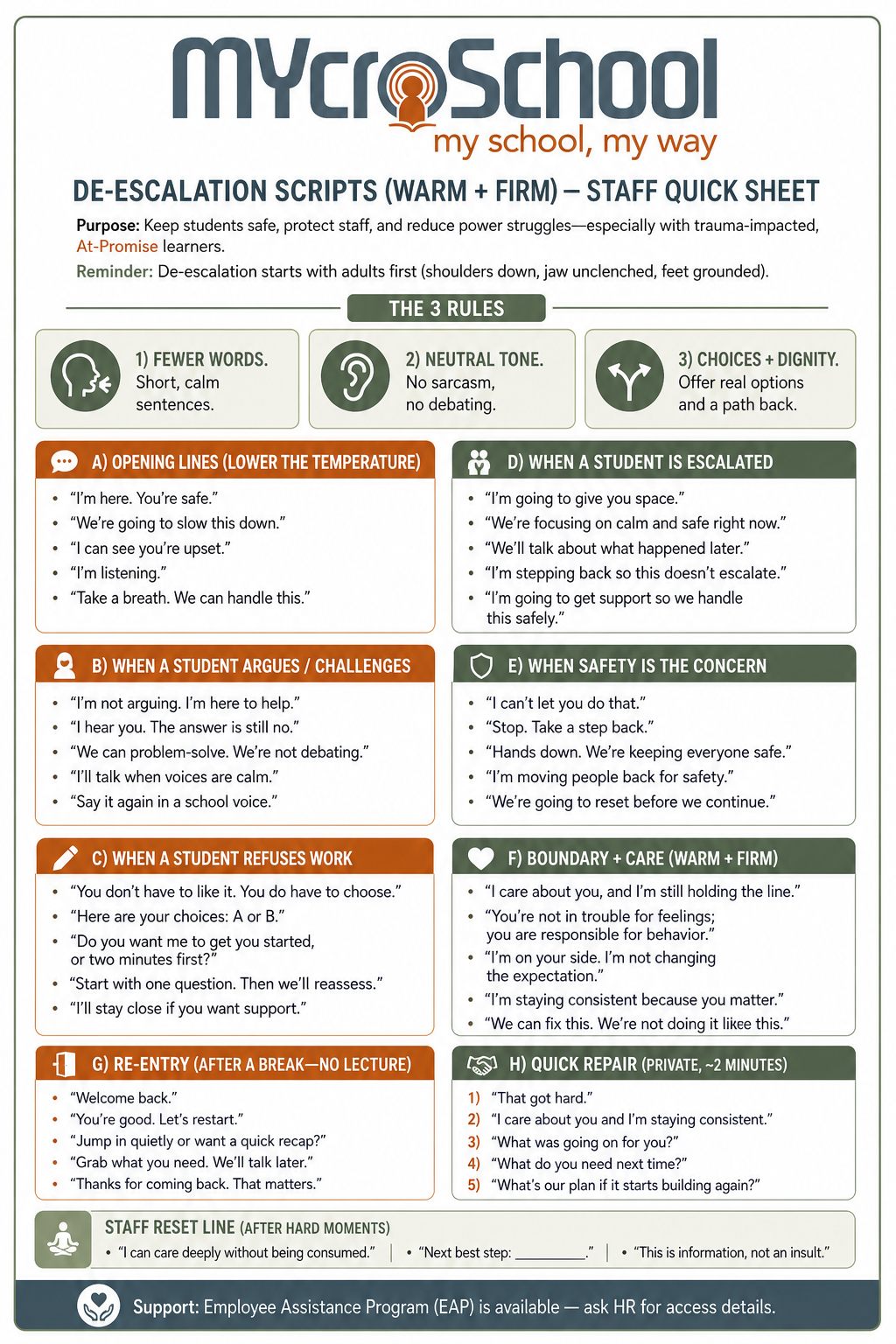
- shoulders down + unclench jaw + feet grounded
- write one sentence: “Next step is _____.”
Small transitions reduce “carryover.”
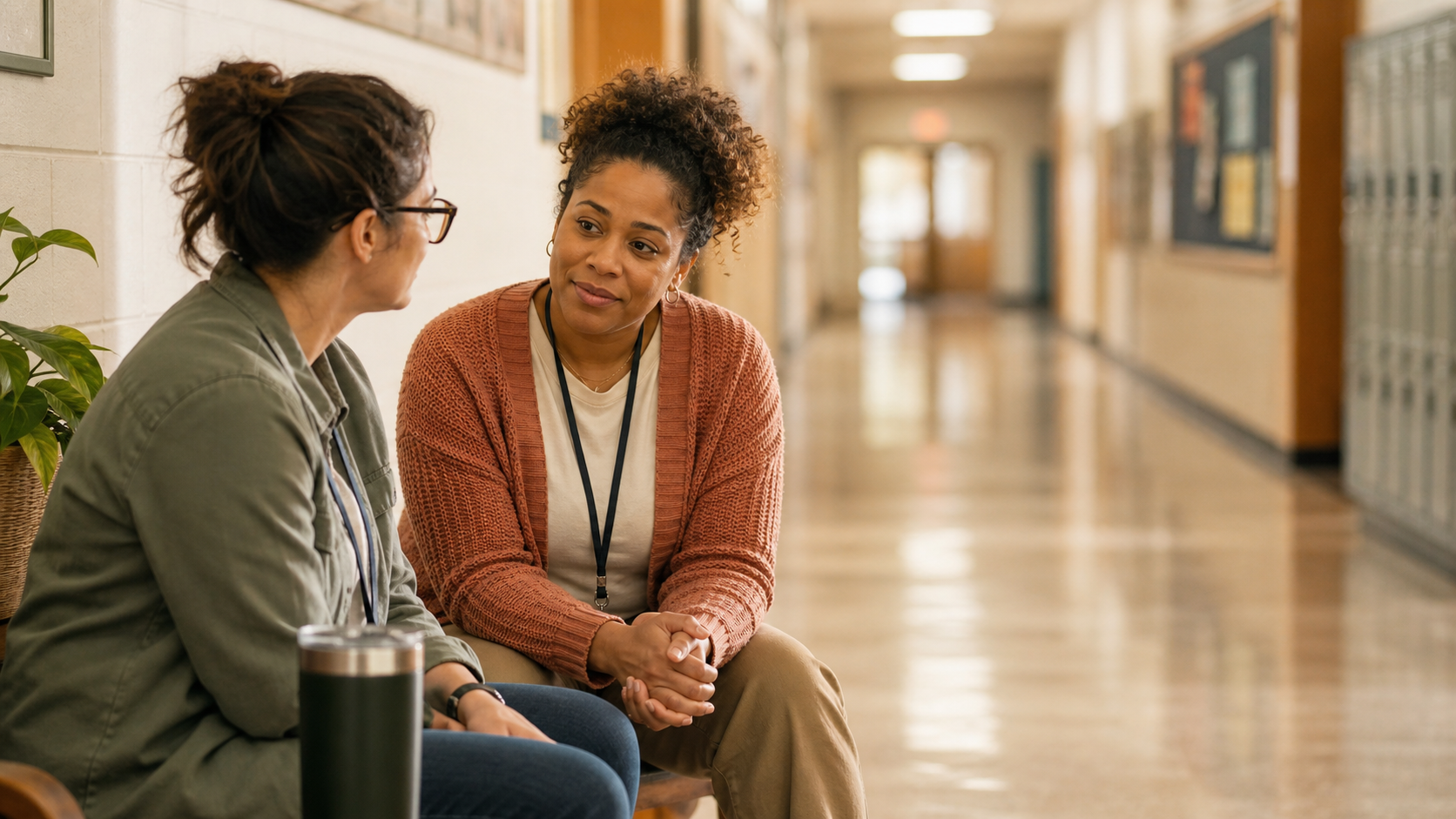
3) Use team support the right way
Secondary trauma grows in isolation.
A healthy debrief is not re-living everything—it’s orienting to support:
- “Here’s what happened (brief). Here’s what I did. What’s the next best step?”
- “What would you do in my shoes tomorrow?”
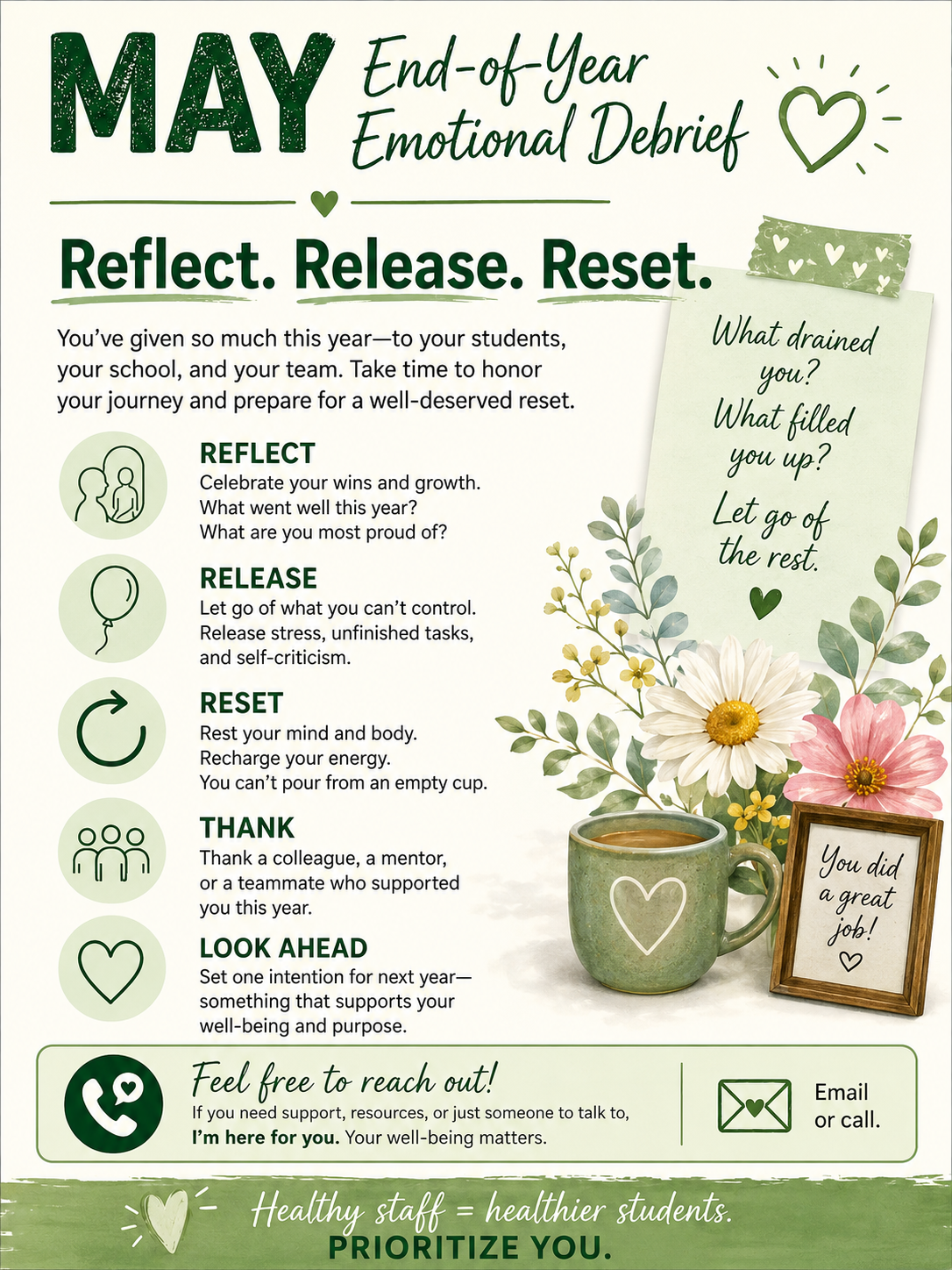
If your role allows, ask for a quick check-in after a hard incident. Five minutes can change the whole week.
4) Build a boundary that protects your evenings
Try one of these simple boundaries:
- No replaying work while driving home (use a podcast or music as a bridge)
- A “doorway moment” when you get home: wash hands, change clothes, short reset
- One sentence you repeat:“I can care deeply and still put this down for tonight.”
This isn’t ignoring students. It’s keeping yourself sustainable for them.
5) Get support that’s designed for this
Secondary trauma is not something you have to self-manage alone.
If you find the stress is sticking, you’re having sleep disruption, or you’re feeling numb/irritable for weeks at a time, consider using our Employee Assistance Program (EAP). Ask HR for details on how to access it.
Getting support early is a strength move—especially in trauma-impacted environments.
A message from MYcroSchool, Inc.
The work you do requires more than skill—it requires heart. And when you repeatedly show up for students who have been through hard things, it is normal for that to affect you.
We want you to know:
- you are not alone
- you do not have to carry everything by yourself
- your wellness matters here
If this post helped, share it with a teammate who might need the reminder. And if you need support, please use the EAP—ask HR for details.
2-minute reflection (optional, but powerful)
Pick one:
- “What story am I still carrying that I need to set down tonight?”
- “What support would help me feel steadier this week?”
- “What boundary would protect my compassion without harming my relationships?”